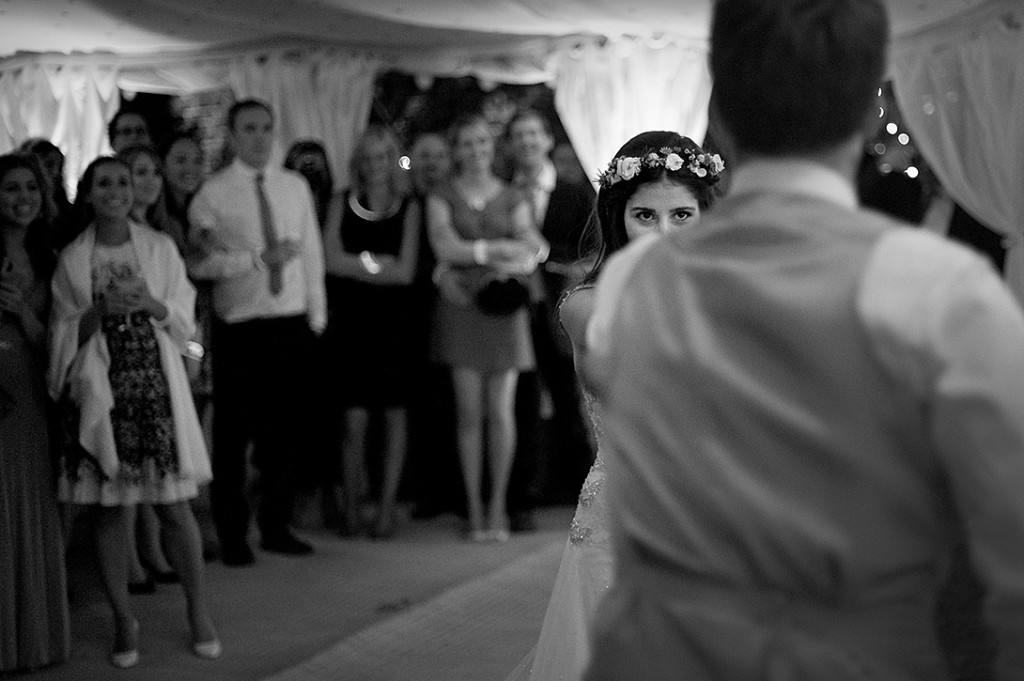
Photographing the first dance can be tricky.
It looks fairly straightforward from the outside. The couple dance, everyone gathers around the dance floor and the photographer takes some pictures. In reality, those first few minutes can be one of the more unpredictable parts of a wedding.
The lighting can change completely, the dance floor can suddenly fill with guests, there may be dry ice, lasers or other assorted lighting effects, and occasionally a couple will launch into a perfectly rehearsed routine that you had absolutely no idea was coming.
After more than twenty years photographing weddings, I’ve learnt that the trick is to be prepared for what is about to happen, while still being ready for the unexpected.
Talk to the DJ or band
Before the first dance, I’ll usually have a quick word with the DJ or band.
I’m not trying to control the lighting or tell them how to do their job, but it helps enormously to know what is coming. Will the lights go down completely? Are there lasers? Is there dry ice? Are they planning to fill the room with flashing lights?
If I know what’s about to happen, I can position myself accordingly and make sure the camera settings are somewhere sensible before the action starts.
Get the important photographs before the dancing starts
One of the things I try to do is make sure I have photographed the couple’s first dance from a few different angles before the dance floor becomes completely surrounded by guests.
The first few seconds are often the cleanest opportunity. You have the couple together, the dance floor is relatively clear and there is usually enough space to move around them.
Once the guests start joining in, getting a clear view becomes considerably more difficult.
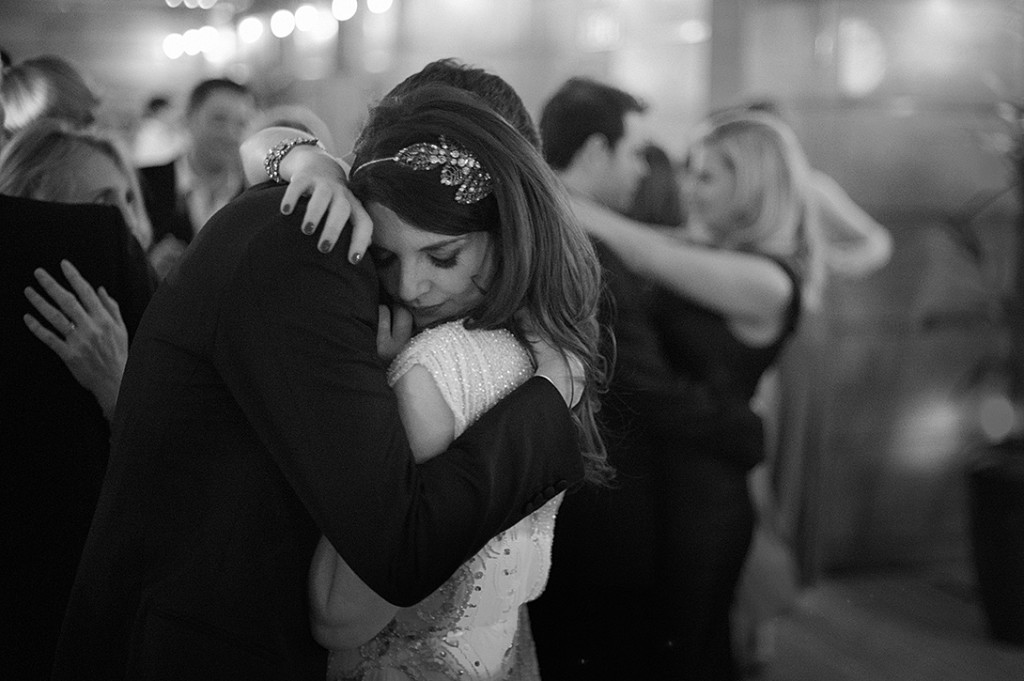
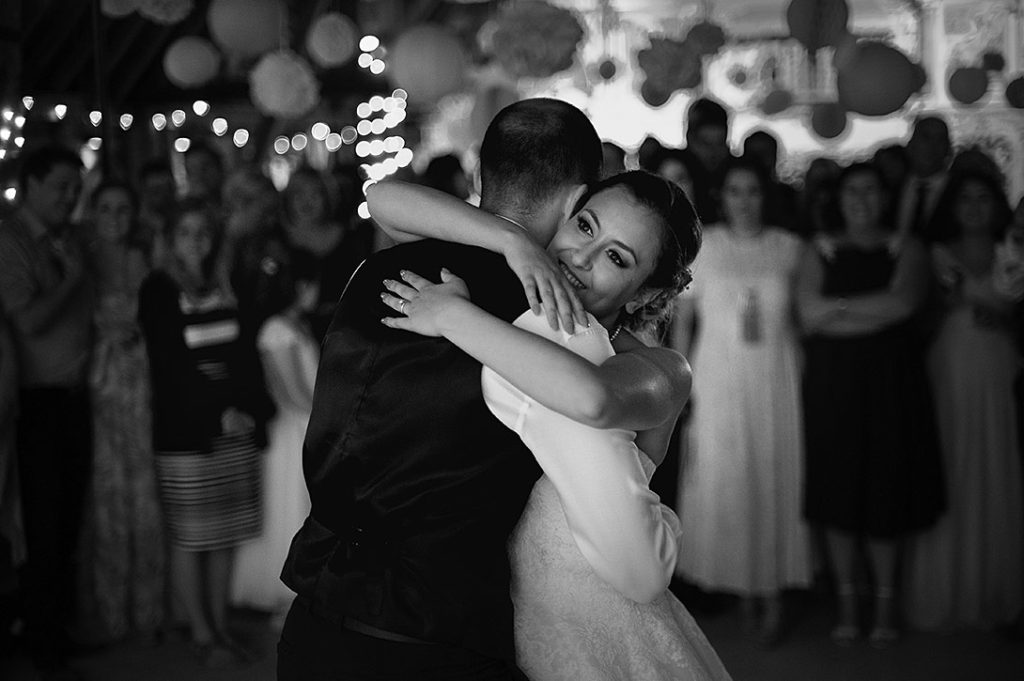
But the guests are also part of the story. Some of my favourite first dance photographs aren’t necessarily of the couple dancing on their own. They’re the moments when you see their friends and family watching, laughing, singing along or eventually piling onto the dance floor themselves.
So I want both.
Don’t just photograph the couple
It’s tempting to concentrate entirely on the bride and groom, but the reaction around them can make the photograph.
I’ll often turn the camera away from the couple for a moment and look at the people watching them.
Parents, grandparents, friends and children can all provide much more interesting expressions than you might expect. There can be tears, laughter, embarrassment and the occasional person who has already had rather more to drink than is strictly necessary.
These photographs help tell the story of what the first dance actually felt like, rather than simply recording the fact that it happened.
Be prepared for the lighting
Wedding DJs have access to increasingly impressive lighting these days, which can look fantastic in photographs – but it can also make life interesting for the photographer.
Lasers, coloured lights, strobes and rapidly changing exposure levels aren’t particularly easy to deal with if you haven’t anticipated them.
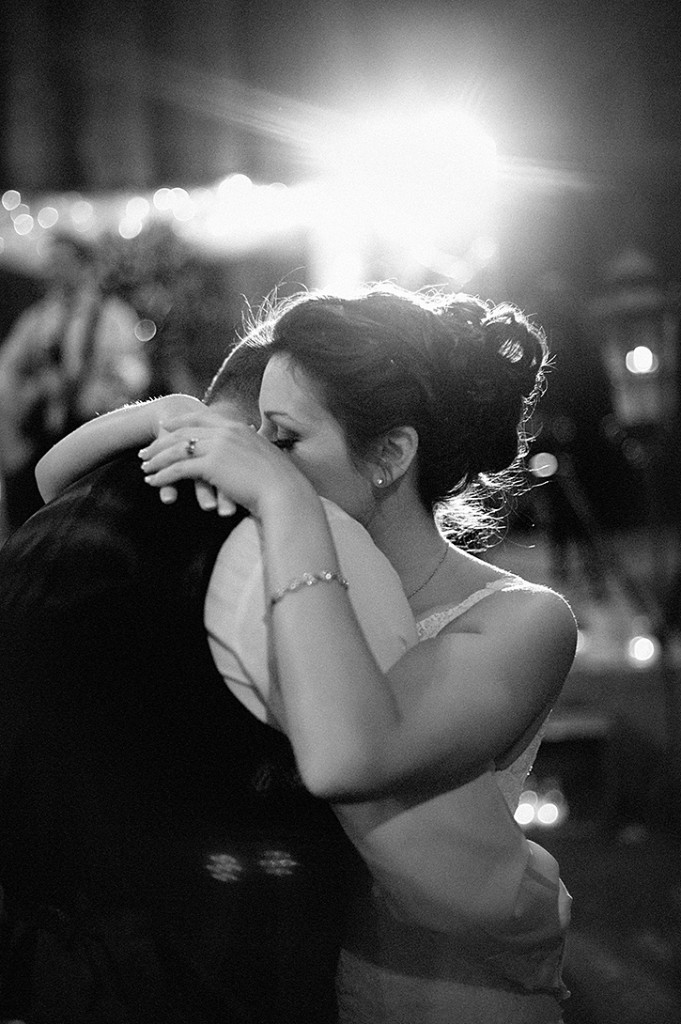
I don’t necessarily want every photograph to look the same, either. Sometimes I’ll use the available lighting to create something atmospheric, while at other times I’ll use flash to make sure I can control the light and separate the couple from the background.
The important thing is not to become so obsessed with getting technically perfect exposures that you miss what’s happening.
The first dance isn’t a studio portrait. It is happening once, in real time, in a room full of people.
Keep moving
Standing in one position and photographing the couple from the same angle will give you a collection of photographs that all look rather similar.
I’ll usually move around the dance floor, looking for different backgrounds, compositions and reactions.
Sometimes the best photograph is a relatively simple shot of the couple together. At other times it might be a wide photograph showing the whole room, or a tighter image with guests framing the couple.
I’m also looking for the moments between the obvious moments – the glance between them, a laugh, a kiss or the point where they realise everyone is watching them.
Those little things can often make the strongest photographs.
And then there are the surprises…
Occasionally, the couple have something planned.
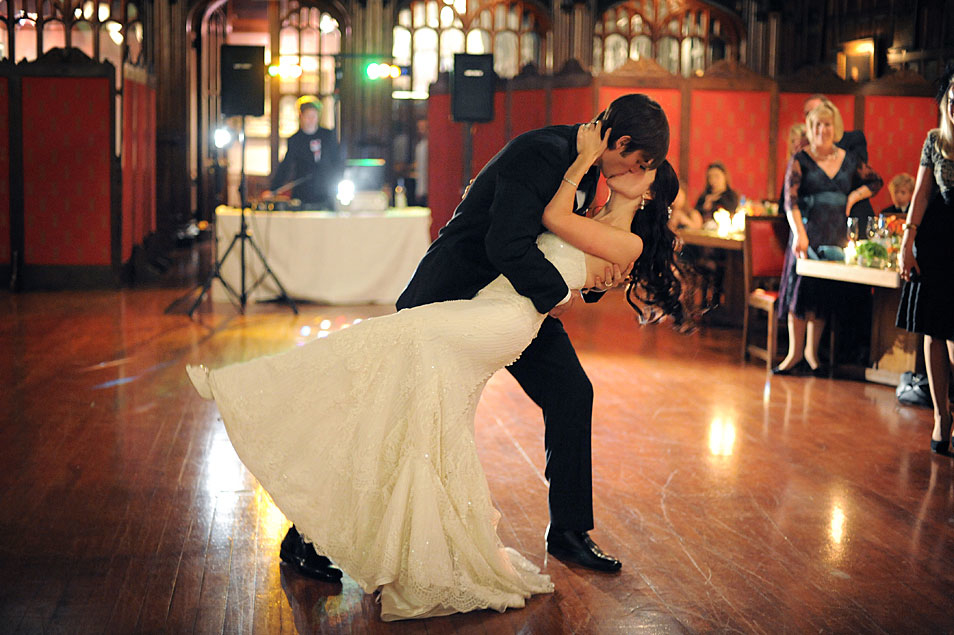
You might suddenly discover that the gentle slow dance you’ve been expecting is actually the introduction to a fully choreographed routine involving lifts, spins and enough choreography to make Strictly look understated.
This is when having a second camera ready becomes rather useful (you wouldn’t want to miss the unexpected ‘Dirty Dancing’ lift!)
A little advice if you’re planning your own first dance
If you’re getting married and you’re thinking about your first dance, don’t worry too much about what it will look like in photographs.
The best thing you can do is enjoy it.
If you’ve rehearsed a routine, it’s worth letting your photographer know beforehand. If you’re planning something involving lifts, dramatic lighting, dry ice or anything else slightly out of the ordinary, give them a warning.
And if you don’t have a choreographed routine and are simply planning to shuffle around the dance floor instead, that’s absolutely fine too. In fact, that is probably more representative of most first dances (and certainly makes it easier to photograph).
From a photography point of view, the important thing is that there is something real happening between the two of you. The photographs should capture the atmosphere, the excitement and the people around you, rather than making the first dance look like a carefully staged photo shoot.
The first dance is only a few minutes
One of the reasons I enjoy photographing first dances is that they are unpredictable.
You can plan where you’re going to stand, talk to the DJ, check the lighting and have the right camera settings ready, but you still don’t know exactly what is going to happen.
And that’s the point.
A good wedding photographer needs to be prepared without being rigid. You need to anticipate what is coming, but also be ready to react when something completely unexpected happens.
After twenty years of photographing weddings, I’ve learnt that the best approach is usually to have a plan, then be prepared to abandon it.
Because the first dance is only a few minutes long.
You get one chance to photograph it.
And sometimes the photographs you weren’t expecting turn out to be the ones you like best.